
Mystery and Science Newsletter by Carol Potenza
Elephant & Mammoth science news and part 2 of Manganese, Dark Oxygen, and the Periodic Table of DEATH and Mystery (the uh-oh part). You don't want to miss this.

_depicting_an_African_elephant_being_loaded_onto_a_ship,_3rd-4th_century_AD,_Badisches_Landesmuseum_Karlsruhe,_Germany_(18643674732).jpg "Mosaic of an african elephant being loaded onto an ancient ship")
Hannibal’s Elephants
Most of us have probably heard of Hannibal (247 to ~182 BC) because he had a platoon of elephants—historical accounts say around 37—as part of his war machine. He was the general who led the Carthaginians (North African Empire, 814 to 146 BC) in the Second Punic War against Rome.
Hannibal’s elephants, thought to be a North African forest elephants (now extinct), were a shock and awe “weapon.” A four-legged giant with two spears and a snake coming out of its face—a true monster. They made for a relatively easy conquest of Roman Iberian territory because everyone ran away in fear.
These elephants on European soil also had a profound effect on Western art, culture, and literature, but there was no direct physical evidence of their existence—until (possibly) now. It comes in the form of a single elephant’s wrist bone discovered in the Spanish city of Córdoba and was identified using modern and mammoth bones as comparisons.

The Córdoba bone is in poor shape, and no DNA or protein markers survived to strictly identify which species of elephant it came from. But it was found in the correct archaeological context layer—one that coincides with Hannibal’s march through Iberia on his way to Rome with his war elephants. Or …
Maybe it was a curiosity traded across the Mediterranean, or a souvenir someone dropped in the rubble. Or maybe it did belong to one of those monsters with spears for teeth and a snake for a nose. But until another elephant steps forward, this little wrist bone is the best eyewitness we’ve got.
An Ancient Mammoth Ivory Workshop in Alaska
Around 14,000 years ago (14 ka), the Holzman site at the Shaw Creek–Tanana River confluence shows hearths, mammoth remains, and quartz tools alongside evidence of cooking and ivory working—people here were turning mammoth tusks into Ice-Age gear.
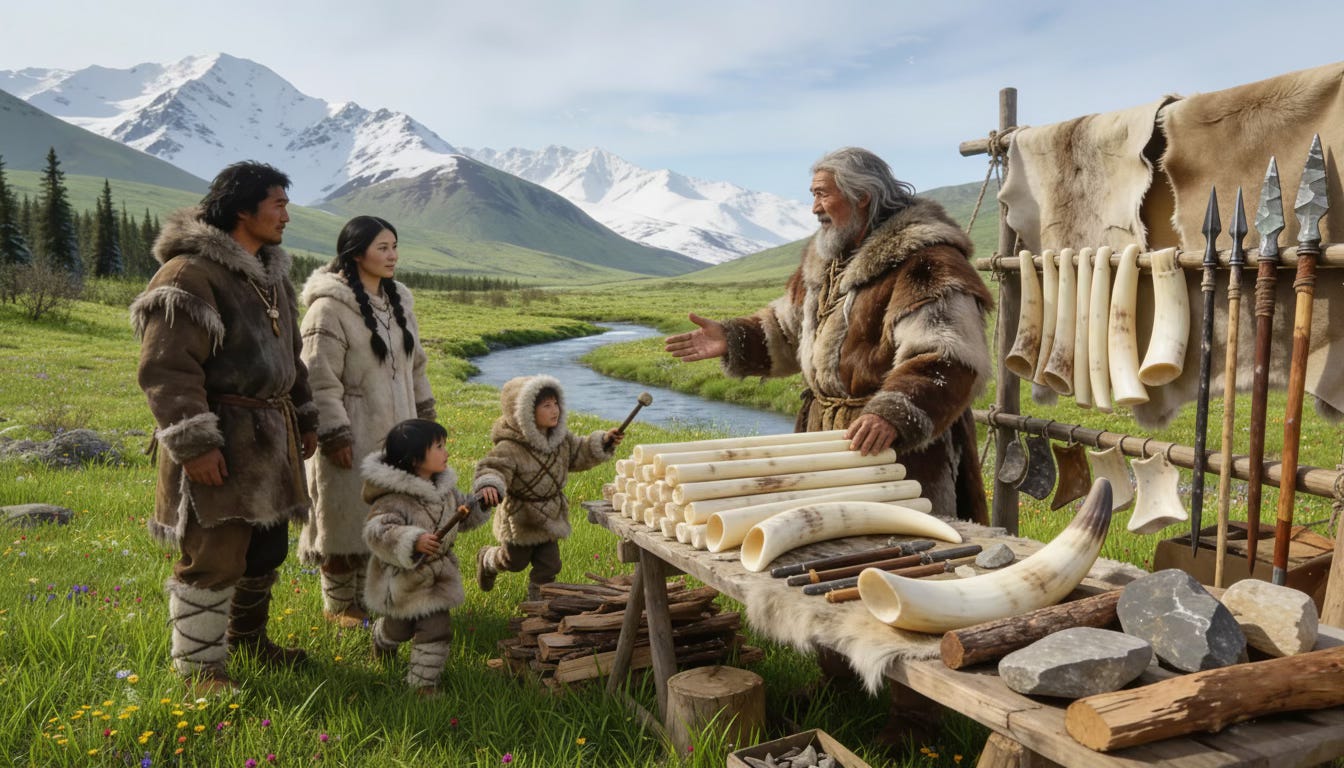
By 13.7 ka, the same spot becomes an ivory workshop of mammoth-centered technology (trade? commissioned work?) Essentially, these ancient people crafted local stone and mammoth ivory into rods and unfinished preforms—perhaps for later use as awls, punches, or parts of weapons, and spears. Layer by layer, the Tanana Valley record slots these mammoth hunters and toolmakers into the Late Glacial window, coinciding with the southward movement into North America of ancestral Clovis groups between ~ 14–13 ka.
Maybe these mammoth craftsmen and craftswomen were the frontier hardware dealers at the very edge of the map—camped where the ice-free corridor opened up, and the “here be dragons” zone began.
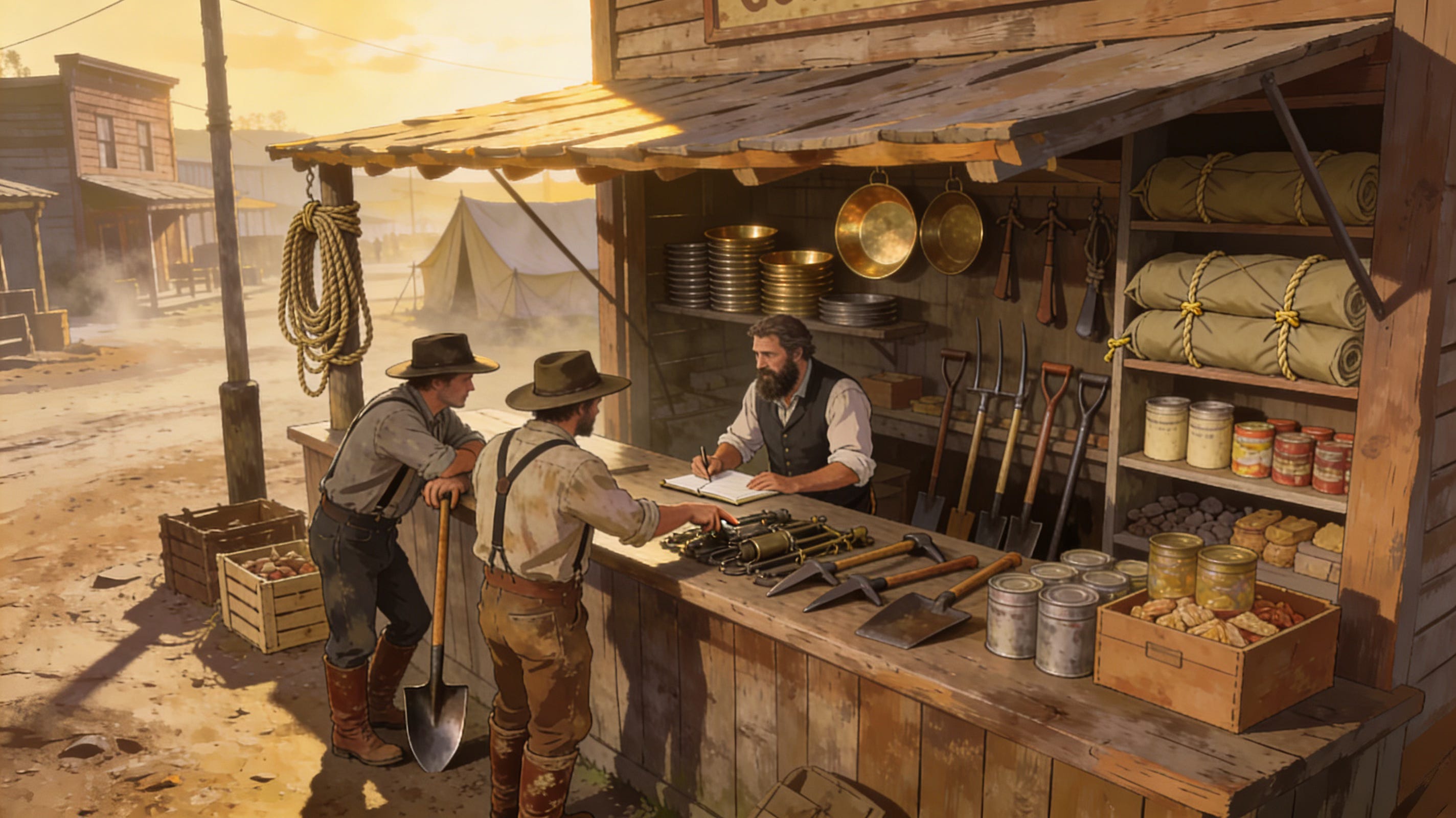
They carved ivory rods and knapped stone tools for wide-eyed Clovis “First Peoples” looking for a new life in a continent no one they knew had ever seen, the Ice‑Age equivalent of gold‑rush outfitters selling picks, pans, and bacon to pioneers heading into their own unknown.
Echo of Lies is available EVERYWHERE February 10th
If you love determined heroines, haunted New Mexico landscapes, and historical mysteries brushed with a little science fiction, Echo of Lies will pull you into a world where the past is never as distant as it seems—and where courage in the present can rewrite what comes next.

(Like the feel of a book in your hand? Paperback coming soon!)
Author reviews:
Carol Potenza, master of the mystery story, has done it again with this fast-paced, page-turning delight. The New Mexico setting layered in history added unique flair to the time-twisting story where nothing is as it seems, but everything makes perfect sense in the extremely satisfying ending. A must read! — Jordyn Kross, Author of the Dirty Daisy cozy mystery series
Echo of Lies is a meticulously crafted coming-of-age story that blends historical mystery and sci-fi intrigue. Carol Potenza brings 1940s New Mexico to life with vivid, haunting detail, but it’s Francie Cortez who truly steals the show. Her grit and intelligence, coupled with the novel’s slow-burning romantic tension, uncanny twists, and emotional depth, kept me turning the pages. Potenza delivers a story that’s both intimate and expansive (like its setting!); this novel is rich in atmosphere, full of heart, and a pleasure to read. — J.J. Cagney, Author of Kirkus Reviews Best Book of the Year: A Pilgrimage to Death
Manganese, Dark Oxygen, and the Periodic Table of DEATH and Mystery, Part 2
The potential discovery of “dark oxygen” is tangled up with manganese (Mn), the workhorse element in nature’s water-splitting machinery. In plants, a manganese cluster in photosystem II powers classic “light” oxygen—the oxygen-generating mechanism we’ve long treated as “settled science.” Briefly, sunlight boosts chlorophyll electrons into higher energy states. Those electrons then move through a chain of carriers so plants can combine carbon dioxide and water into carbohydrates and, as a bonus, release oxygen.
(6)Carbon dioxide + (6)water + light —> (1)glucose or carbohydrate + (6)oxygen molecules
6CO2 + 6H2O + photons —> C6H12O6 + 6O2
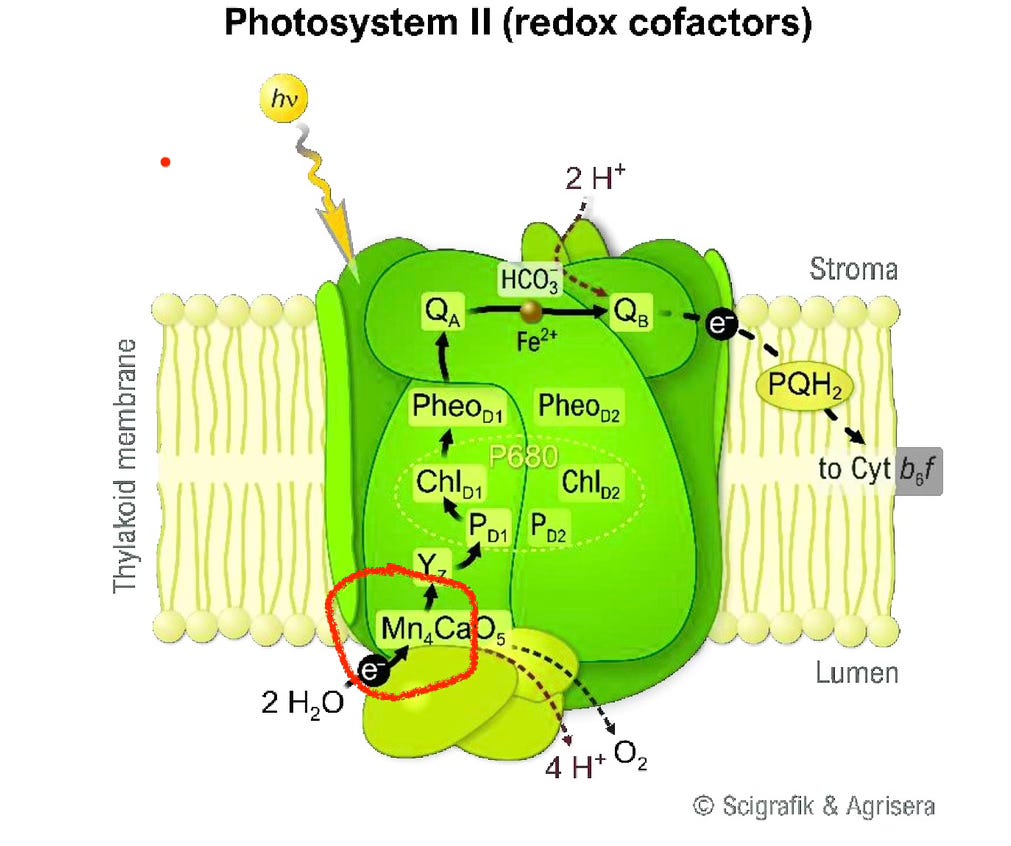
In the overall photosynthesis reaction, 24 electrons must move for each molecule of glucose made, and they must be replaced for the process to continue. Manganese in the water‑splitting complex raids water molecules for those replacement electrons, leaving behind hydrogen ions (H⁺) and O₂. Voila! The oxygen that helped ignite life as we know it.
But can we move electrons without all the messy trappings of life? Yes—in batteries. Electron flow is how we generate electricity, and electron‑conducting metals from the periodic table—including manganese—make that possible. These metals are in short supply, so we’re hunting for untapped sources, like the polymetallic nodules scattered across the abyssal (what a great word) trenches of the oceans.
Manganese (Mn) is a silvery‑gray transition metal in group 7 with atomic number 25, best known today as a steel‑hardening workhorse (think Damascus‑style steels and swords) and a pillar of alkaline batteries. What makes manganese especially interesting is its willingness to vary oxidation states—most commonly +2, +3, +4, and +7—shuttling electrons in ways that anchor both industrial chemistry and biological energy flow.

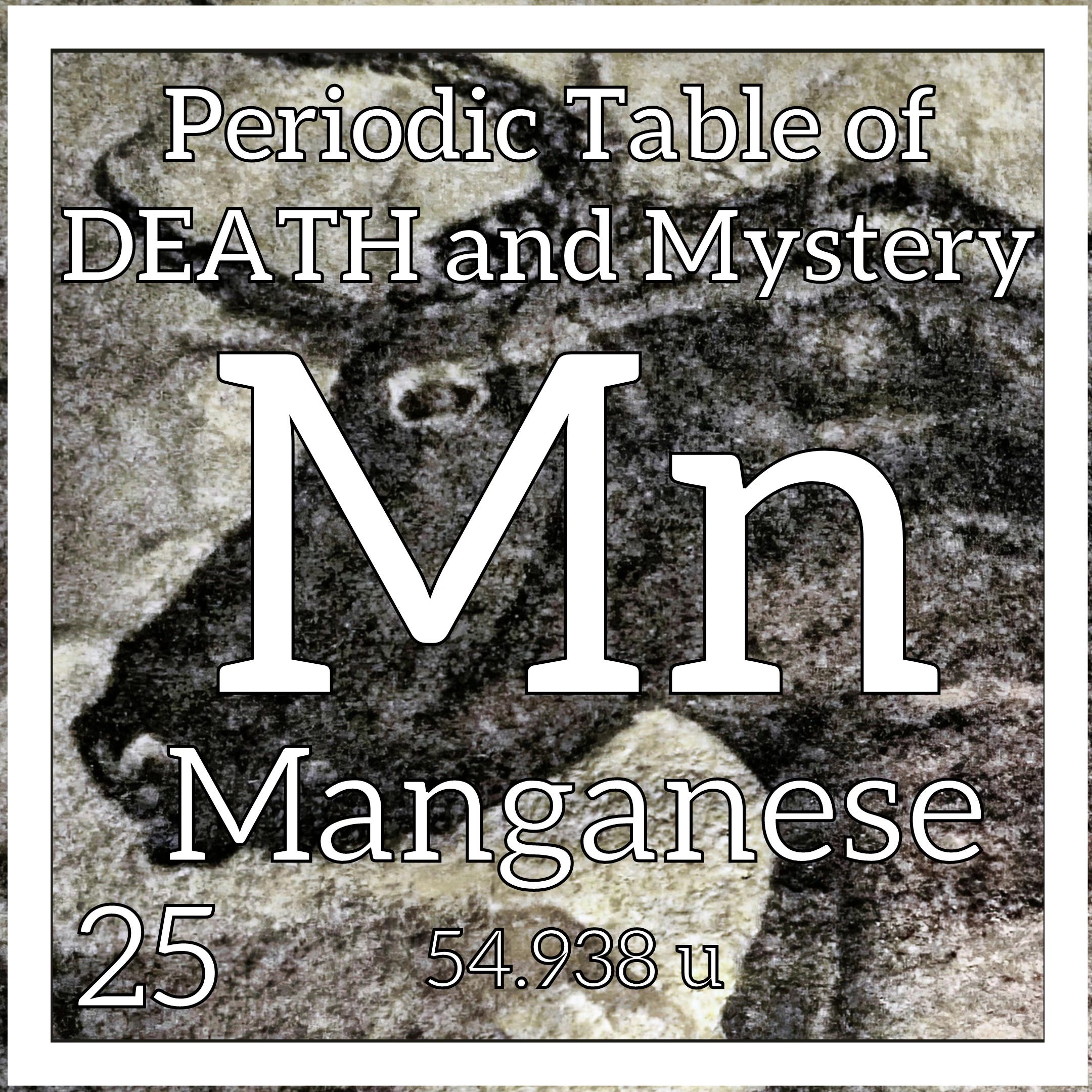
Humans and manganese go back millennia. Some of the paint used in the 17,000‑year‑old Lascaux cave drawings of Ice Age animals was made from scarce manganese oxide minerals, including hausmannite. The closest known manganese‑rich source for Lascaux is in the central Pyrénées, about 150 miles (~250 km) away. Manganese oxides ground and mixed with animal fat produced a permanent black worth enough to those artists that they expended serious effort to get it.


Which is exactly what’s happening now with abyssal polymetallic nodules and the recent controversy over the Sweetman et al. Nat. Geosci. 17, 737–739 (2024) article. A mining group, The Metals Company (TMC), commissioned the Sweetman expedition to the Clarion–Clipperton Zone, where these nodules sit between about 9,800 and 19,700 feet (4,000–6,000 m) down. This is not trivial fieldwork.
Sweetman et al. reported that the nodules, acting like natural batteries, produce oxygen in the darkest regions of the ocean—“dark oxygen.” If true, this finding could completely upend our understanding of Earth’s oxygenation and the evolution of life. It could also mean that mining these nodules risks disrupting a key deep‑sea system that helps keep the oceans oxygenated and, by extension, could destabilize life‑supporting conditions for the entire planet(!)
For the authors, the benefits are immense: a high-visibility Nature paper, substantial new funding ($2.7 million over three years from the Nippon Foundation) to lead a dedicated “dark oxygen” project, leadership of multiple deep-sea expeditions, strong media attention, and a central role in a politically hot scientific question.
Except … there’s a problem.
TMC, which also has an enormous financial stake in nodule mining and the future of “clean” energy—the definition of a conflict of interest—had access to all the raw data and research notes from these experiments. They accuse Sweetman et al. of omitting data that didn’t support their results and repurposing data from another publication without citation. One major point: some of the experimental chambers that supposedly produced dark oxygen contained no nodules at all.
Is this fatal to the dark‑oxygen hypothesis? No. Let’s consider two paradigm‑shifting examples.
Gregor Mendel, a 19th‑century monk and the father of modern genetics. Two things. First, his pea‑crossing data might have been “cleaned up” because the results were almost too perfect. But scientific consensus has shifted away from calling him a conscious fraud toward seeing this as data grooming in service of a basically correct insight. Second, although Mendel mentions work on other species (e.g., Phaseolus beans, Mirabilis jalapa, Hawkweed/Hieracium), he doesn’t present detailed tables for them the way he does for peas—most likely because their trait sorting didn’t support his pea data. Later geneticists rediscovered Mendelian ratios independently, and Mendel’s model lined up beautifully with future genetics. No harm done.
Martin Fleischmann and Stanley Pons’s cold fusion (1989). They claimed room‑temperature fusion from electrochemical cells, citing excess heat, neutrons, and tritium. If cold fusion were real, it could have revolutionized energy production. But no one could reliably replicate their results, and multiple papers were retracted. Cold fusion became another casualty of pathological science, where “people are tricked into false results... by subjective effects, wishful thinking, or threshold interactions.”
Replication is the key to good science, and Sweetman has been commissioned to do just that—but he has huge stakes and an obvious conflict of interest. So replication must also be external: another, non‑affiliated group has to reproduce the dark‑oxygen signal.
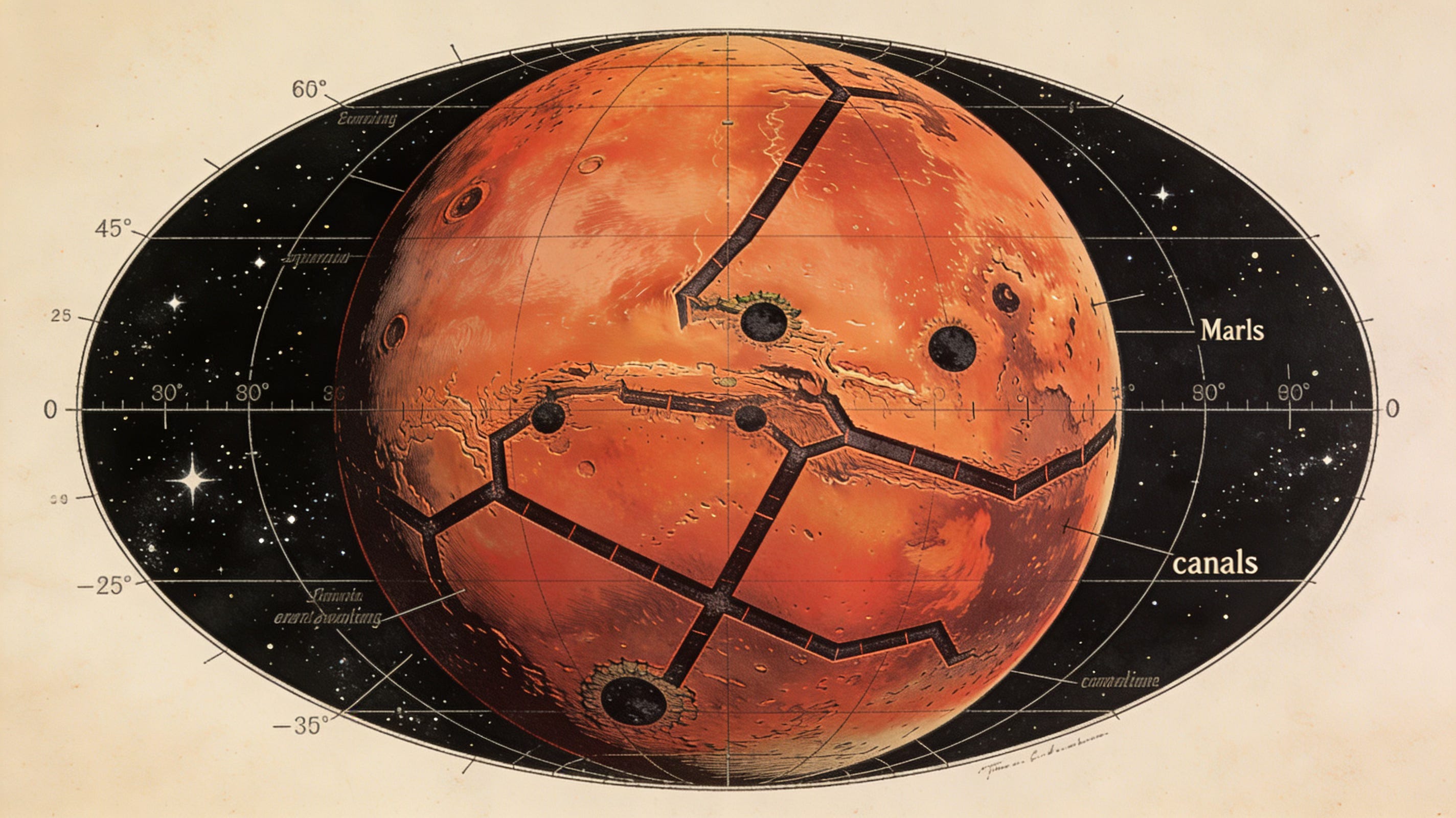
If they do, every science textbook will need an update. If not, dark oxygen will go the way of Percival Lowell’s Martian canals.
Thanks for getting this far!

Fascinating! Thanks for the information! And I'm looking forward to your novel!