Molybdenum, the Quiet Chemistry of Obesity, and the Periodic Table of Death and Mystery, Part 1
Shattered is coming out SOON! Get your copy pre-ordered. PToDM: This is Part 1 of a series on how quiet elements on the periodic table show up in the messy chemistry of real human lives.


I’m heading toward the finish line with Shattered: A De-Extinct Zoo Mystery, Book 4. It’s currently with my professional editor, then off to the proofreader, with a release date of September 1, 2026.
BE SURE TO PRE-ORDER YOUR COPY ON AMAZON
If you prefer other retailers, I’ll have links for B&N, Kobo, and Draft2Digital soon. There will also be a print edition.
A quick background story about Shattered: last year, when I finally sat down to write it (my stories tend to brew in my head for a while), I needed a very specific answer—how would someone kidnap a rhino from a zoo? In this case, a woolly rhino.
AI was just starting to become widely available, so I naively typed the question into ChatGPT.
How would I kidnap a rhino from a zoo?
🤯 It did not go well.
Not only would it not answer the question, but it also made it very clear that the question itself was illegal, immoral, and ill-advised. I half expected the zoo police to show up at my door 🐼.
As it turned out, I didn’t need the answer. I had already set everything in motion in the earlier books—I just hadn’t realized it yet.
I already have the opening of the final book in Milly’s pentology in my head, along with the ending of Book 5: Hunted: A De-Extinct Zoo Mystery. FINALLY, woolly mammoths 🦣. Here are a few taglines that might work—maybe.
When the prey becomes the predator…
The hunters made one mistake: they chose a predator as their prey.
They hunt her for sport. She’ll hunt them to extinction.
De-extinction made her prey. Survival made her a predator.
I’m still brewing …
Molybdenum
Molybdenum (Mo) is one of those elements that doesn’t draw much attention on the periodic table before it quietly sneaks up on you. It is a silvery transition metal, atomic number 42, with a relatively high atomic mass (~95.95) and an exceptionally high melting point around 2620–2625 °C (~4753 °F). It is not rare in Earth’s crust, but you will never find it as a free metal, because it tends to occur bound in minerals such as molybdenite (MoS₂) or molybdena (see below).
The element was first correctly identified as a new metal by Swedish chemist Carl Wilhelm Scheele in 1778 (who also discovered oxygen and identified tungsten, barium, nitrogen, and chlorine). In 1781, Peter Jacob Hjelm first isolated molybdenum metal, firmly separating it from other heavy metals being studied at the time.
The name “molybdenum” comes from the Greek molybdos (μόλυβδος), meaning “lead” or “lead‑like.” Early miners and alchemists often confused molybdenite with lead minerals like galena because both are soft, dark, and streak easily, so the ore was lumped in with “lead” minerals. When chemists eventually realized it was a distinct element, they kept the historical root and Latinized it as molybdenum—essentially (I think this is hilarious), “this one used to be mistaken for lead.”
Molybdenum is valued because it forms hard, stable carbides—compounds where carbon atoms tuck into the metal’s crystal lattice and create hard, wear‑resistant spots that reinforce the metal and help it keep its shape under stress. In steel, molybdenum carbides act like microscopic rebar. They raise strength and improve resistance to high‑temperature softening, or “creep.” As a result, molybdenum‑strengthened steel and superalloys are used to make electrodes for high‑temperature glass furnaces and to improve the corrosion resistance of stainless steels and pipelines in “aggressive” (very acidic or very basic) chemical environments.
Historically, molybdenum‑alloyed steels were used in heavy artillery such as the World War I “Big Bertha” guns, whose barrels had to withstand extreme temperatures and pressures during rapid firing that could cause ordinary carbon steel to erode and deform.

An Essential Trace Mineral—Humans Need Molybdenum
In the body, molybdenum is buried at the heart of a tiny molecular “tool” called the molybdenum cofactor, or Moco. Several important enzymes depend on this cofactor to function. One of the most important for this story is xanthine oxidoreductase (XOR). XOR sits at the end of the pathway that breaks down purines—the building blocks in DNA and in many foods—and turns them into uric acid.

XOR can run in two modes. In one mode (xanthine dehydrogenase), it passes electrons safely to another important cofactor, NAD⁺. In a second mode (xanthine oxidase), it passes them to oxygen instead to make superoxide—an oxygen molecule carrying an extra electron. The molybdenum atom inside XOR is part of the machinery that produces uric acid and helps generate these reactive oxygen by‑products.
Generally, two electrons make up one molecular bond or connection between two atoms. Reactive oxygen species are dangerous because they steal electrons. They pull electrons away from the molecules that make up cells, and in doing so they damage those molecules in ways the cell cannot always repair. Superoxide often starts chains of reactions that generate other oxidants such as hydrogen peroxide (bad) and, in the presence of certain metals, hydroxyl radicals (really bad). That chain reaction is why superoxide matters. Even if it is not always the most aggressive oxidant, it is a key starting point for the chemical cascade that damages many different targets.
Inside cells, reactive oxygen species can attack DNA, fats, and proteins. When DNA is hit, its bases can be modified or broken, leading to mutations or strand breaks that, if not repaired, interfere with accurate copying of genetic information or trigger cell‑death programs.
When the fatty components of membranes are oxidized, they can become leaky or lose their flexibility, disrupting the careful control of what goes in and out of the cell and its internal compartments.
Proteins can have their side chains oxidized or cross‑linked, which can change their shape and disable their function, or make them clump together in ways the cell’s quality‑control systems struggle to manage.
Over time, if enough of these components are damaged at once or the damage happens repeatedly, the cell’s repair systems are overwhelmed, and the cell may either function poorly, enter a half‑alive or senescent state, or die. That cumulative, multi‑target cellular damage is why oxidative stress is a contributor to chronic disease.
Uric Acid: Defender and Trouble‑Maker
Uric acid—the other product of XOR—is a bit of a double‑agent. At normal levels, uric acid dissolves in the blood, travels to the kidneys, and is passed out in urine. Before it’s eliminated, uric acid can actually react with and “soak up” harmful reactive oxygen species in the blood, so it adds to the body’s overall antioxidant defenses. In that sense, the molybdenum in XOR helps create a modest defender.
When uric acid levels stay too high for too long, it doesn’t dissolve as well in water and can form sharp crystals in joints and tissues. The crystals irritate the joints and signal immune cells, which creates the painful swelling we know as gout. High uric acid concentrations are also linked with kidney stones and kidney damage. So, the same molybdenum‑containing enzyme (XOR) that quietly processed purines now sits upstream of a list of problems because …
HIGH Uric Acid –> HIGHER Reactive Oxygen Species –> Oxidative stress —> MORE Cellular Damage –> Metabolic disease

High uric acid inside cells usually means XOR is working overtime. XOR working overtime means more reactive oxygen species are created.
These reactive oxygen species can damage the lining of blood vessels, make them stiffer and less able to relax, and stir up ongoing, low‑grade inflammation. Chronically, that constant irritation can damage arteries, make blood pressure harder to control (high blood pressure), and make it harder for the body to handle sugar properly (diabetes).
Nitric oxide (NO) is a gas that blood vessels produce to signal the vessel wall to relax. It helps keep blood vessels healthy, and it is very sensitive to reactive oxygen species. When nitric oxide is available, blood vessels can open up when needed, blood flows more smoothly, and platelets are less likely to clump and form clots.
When oxidative stress is high and uric acid is elevated, nitric oxide is made in smaller amounts and gets destroyed faster. With less nitric oxide, vessels stay tighter, blood pressure tends to rise, and the inner surface of the arteries becomes more sticky and inflamed.
Remember, oxidative stress and inflammation are not always bad.
In small bursts, they are part of how the body fights infections and repairs damage. The problem comes when this response is turned on all the time, as can happen when uric acid and reactive oxygen species stay high and when enzymes like XOR are overactive. Then, instead of brief, useful spot reactions, you get a long, slow burn that gradually damages tissues, including blood vessels, kidneys, and fat tissue.
This is where molybdenum and XOR step out of the biochemistry textbook and into everyday health. The molybdenum in XOR allows the enzyme to do its job converting purines into uric acid—but when XOR shifts toward its oxidase mode and runs hot, the same metal center is part of a machine that produces both extra uric acid and extra reactive oxygen species. In that sense, molybdenum in XOR has its own Dr. Jekyll and Mr. Hyde role: in a balanced system it helps clear out old molecules.
But in an overloaded, low‑oxygen, inflamed system, it helps feed the very oxidative stress that pushes the system further out of balance.
And when could that happen? In our well‑fed cultures, with plenty of high‑calorie food available and jobs that lack any type of physical work (like tapping on a keyboard for Periodic Table of Death and Mystery articles), it happens when you carry extra fat on the body. In other words: being overweight or obese.
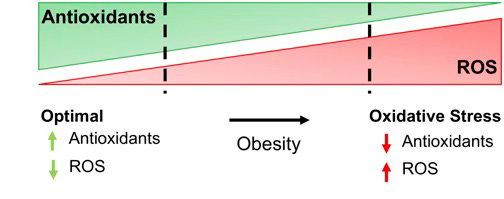
In the U.S., about 72% of adults are considered overweight or obese. In Great Britain, it is roughly 64–70% and rising. In the European Union, nearly 60% of people are considered overweight or obese. Canada is around 68%. Australia, about 66% and New Zealand, about 64%. And while the U.S. “wins,” India and China are also in the top three.
So what is the prize for winning?
Extra body fat –> chronic reactive oxygen species –> chronic diseases. Ugh.
And we can link part of that to molybdenum and XOR.
Next Time: Molybdenum, the Quiet Chemistry of Obesity, and the Periodic Table of Death and Mystery, Part 2
That’s all for this newsletter. Thanks for getting down this far.