
Lithium, Social Engineering, and Periodic Table of DEATH and Mystery
We already add fluoride to our drinking water. Why not lithium, too? Well... The Periodic Table of DEATH and Mystery

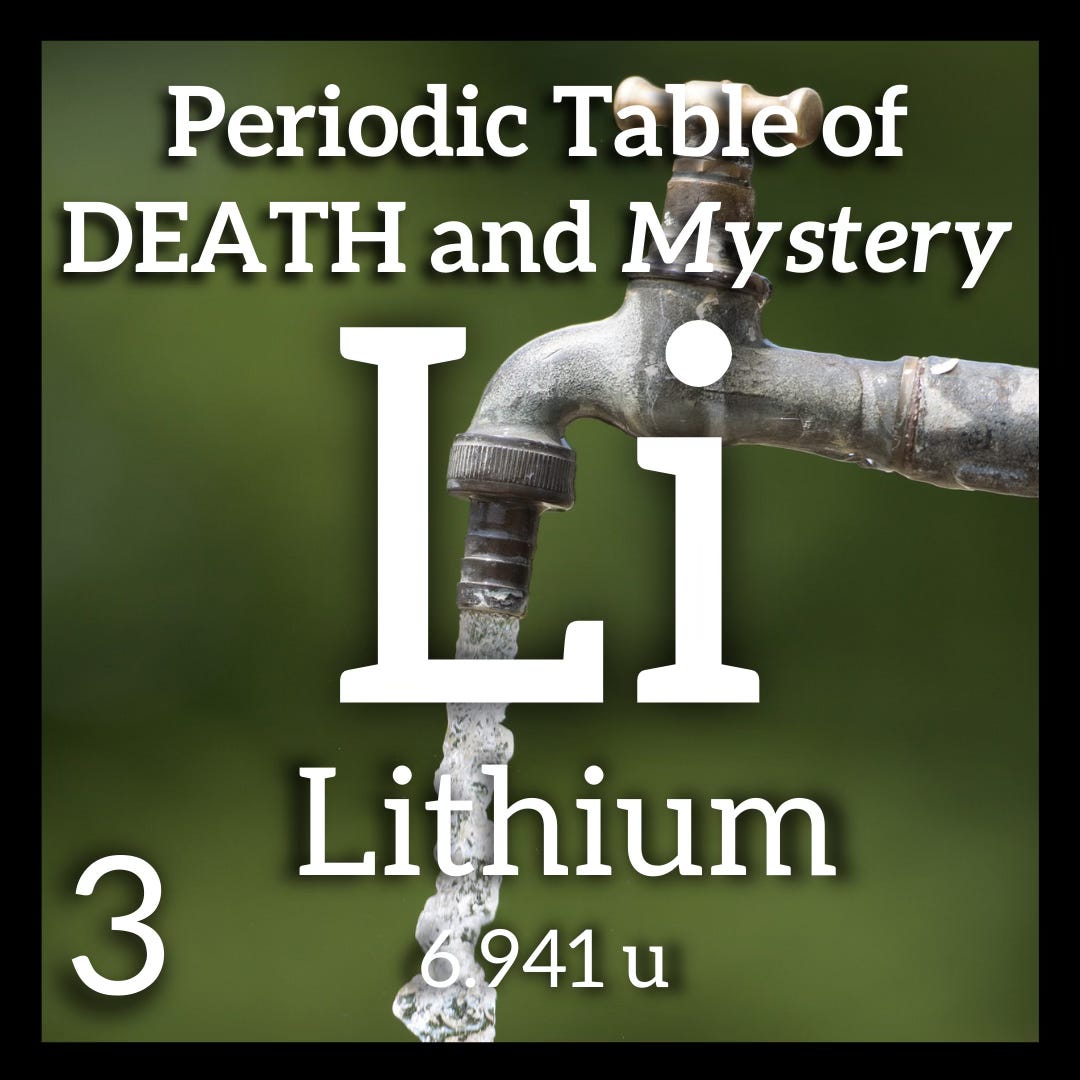
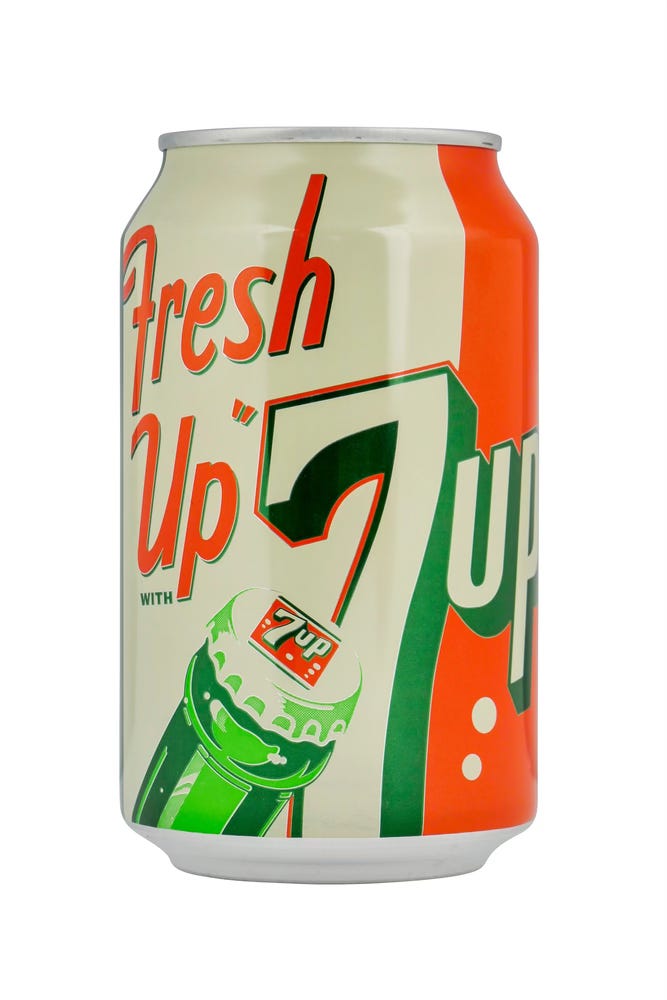
Lithium (Li) is a relatively rare element on Earth, present in virtually all rocks—lithos is Greek for stone, after all. It’s been used by the medical community since the late 1940s to prevent and treat mental health issues like mania, bipolar disorders, and impulse control problems. But its calming effect on the brain has been known since antiquity. Water from Georgia’s Lithia Springs was used medicinally for centuries by Native Americans, and did you know the soda pop 7-Up was originally formulated with lithium citrate as an antidepressant, which was fortuitous since it was patented right around the time of the 1929 stock market crash.
Lithium treatment has also been shown to significantly reduce suicide risk in humans and prevents buildup of Alzheimer’s plaques and tangles in the brains of mice. Unfortunately, the potential for serious side effects had slowed studies of lithium and its effects on dementia in humans.
Until more drug trials are approved on humans, how might we study lithium’s effect on diseases like Alzheimer’s? Well, it turns out that a number of cities and municipalities in the U.S. and around the world have detectable amounts of lithium dissolved naturally in their water supplies. Not therapeutic levels, but enough that there may be a statistical difference in antisocial behavior and disease when compared to places with low or no lithium in drinking water.
Let’s see what kind of research our tax dollars are being used for, shall we?
In this first study, the authors compared crime statistics over a 9-year period in Texas counties with drinking water containing no lithium to counties with lithium levels ranging from 70-170 mg/L (Just FYI, the therapeutic dosage is in the range of 0.6-1.2 mg/L, about 10-fold higher). After crunching the data, they found significantly lower rates of suicide, homicide, rape (p < 0.01), and robbery, burglary, and theft (p < 0.05) in the counties with lithium drinking water(!) Wow.

How about Alzheimer’s and dementia? It’s not as clear cut once analysis considered variable demographics and health access disparities, but the authors point out the people in the highest lithium counties would have to drink 1000 liters of water a day to ingest therapeutic doses that work in animal models. So, Li in drinking water wasn’t much help, but definitely read the comments to this article. There’s still a lot of hope.
The last study I’ll leave you with is … scary because the authors—who see great potential for lithium in drinking water—propose to use it for social engineering. A quote from the article:
“Next steps might include testing this hypothesis by randomised community trials of lithium supplementation of the water supply, particularly in communities (or settings) with demonstrated high prevalence of mental health conditions, violent criminal behaviour, chronic substance abuse and risk of suicide. This may provide further evidence to support the hypothesis that lithium could be used at the community level to reduce or combat the risk of these conditions.”
Cool. Let’s involuntarily drug everyone into compliance.
We’ve seen these types of proposals before: from fluoride in water (relatively benign), to eugenics and forced sterilization of those deemed ‘unfit,’ to China’s one-child policy (boy, are they regretting that one now), to the Final Solution. A question from me: Would you trust me to decide?
After all, I’m a scientist.