
Fluorine, Mount Vesuvius, and the Periodic Table of Death and Mystery
Who knew that Pompeiians had seriously great teeth? Too bad about that volcano thing.

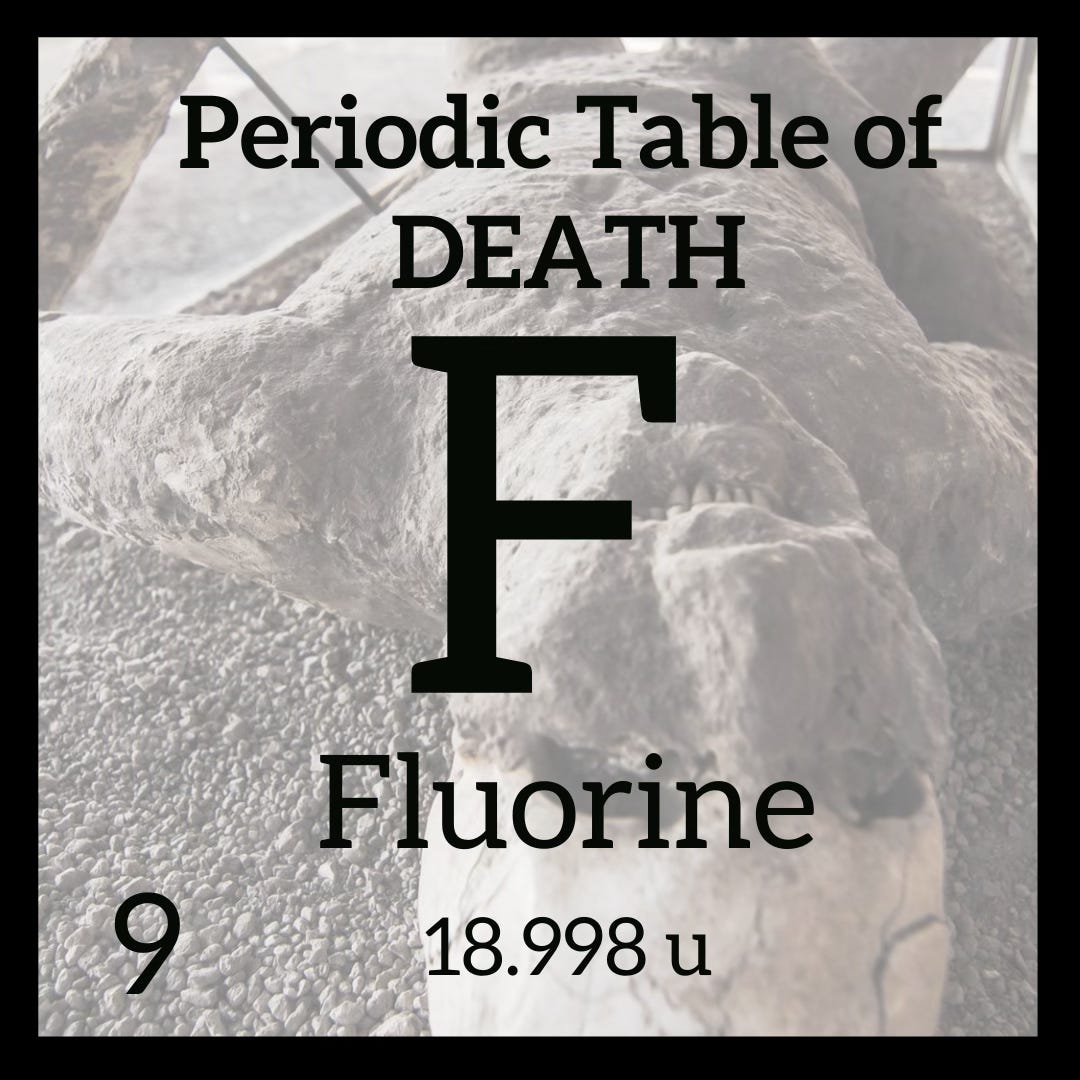
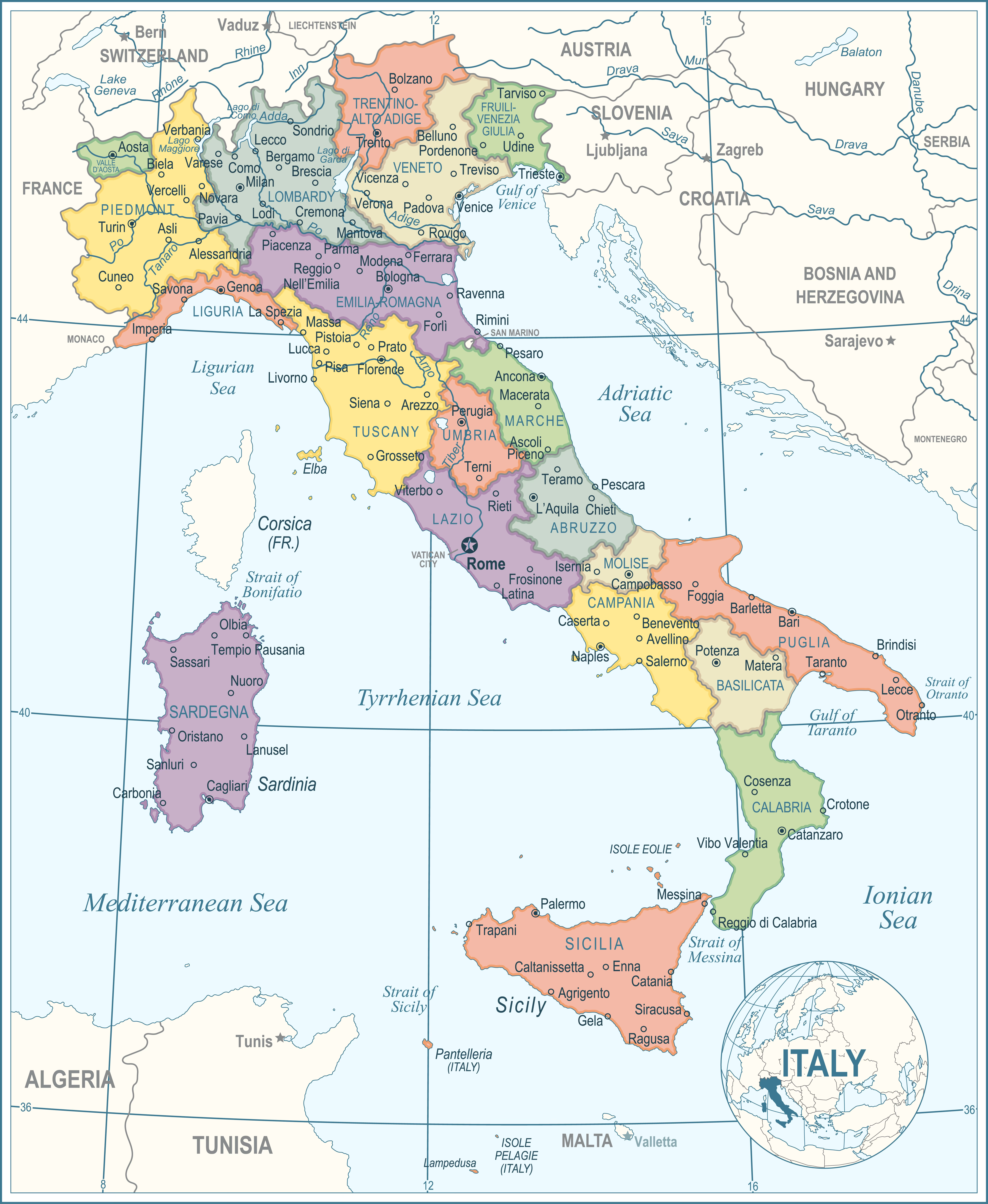
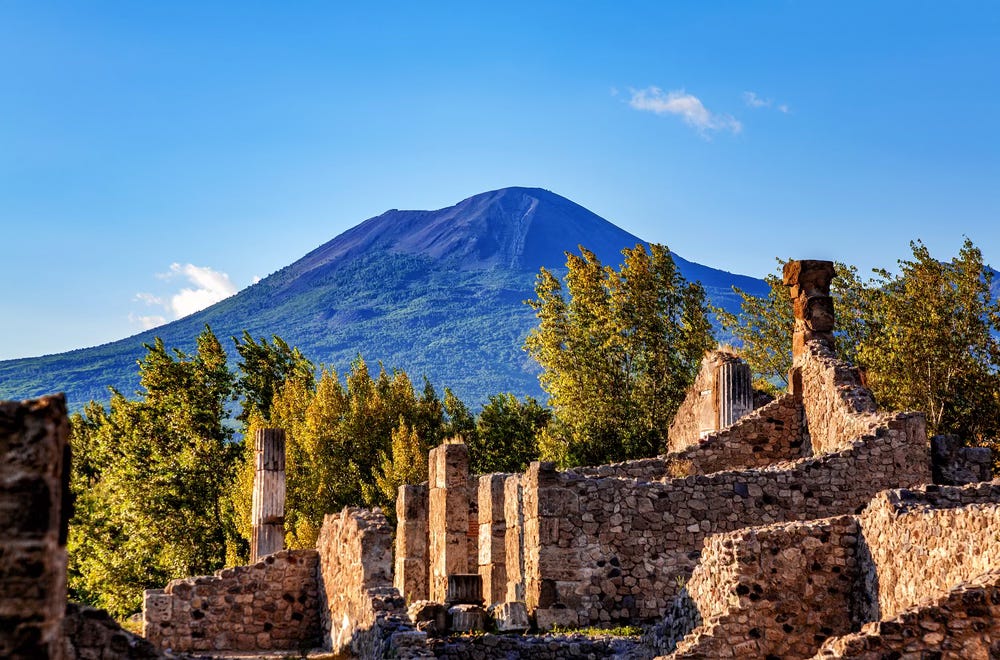
In 79 A.D., a catastrophic volcanic eruption rained ash, rocks, and death down on Roman cities in southern Italy. Pyroclastic flows, superheated gaseous clouds measuring 700°C (1300°F), swept down the sides of Mt. Vesuvius (1), vaporized everything in their paths, including the cities of Pompeii and Herculaneum, and every living creature inhabiting them and the surrounding countryside. This area of Italy is where my people are from. In fact, right next to the region of Campania, where Mt. Vesuvius rests, is Basilicata and its capital city, Potenza.
One day, maybe I’ll go there and become their queen.
This article is not directly about the infamous eruption, but about the bones and teeth of its victims—and fluorine (F), atomic number 9, and a periodic table element that is extremely reactive, such that several people died when first trying to isolate it in the early 1800s. It also has the disconcerting characteristic of making everything it touches burst into flames (2).
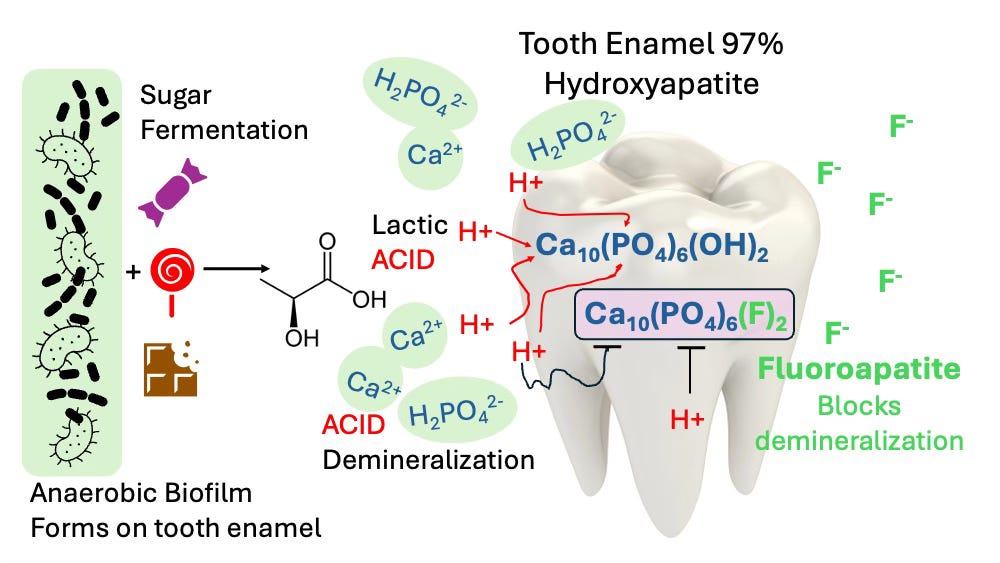
Still, humans use fluorine every day as fluoride (3). You might brush your teeth with a toothpaste containing sodium fluoride (NaF) or live in a city that deliberately adds trace amounts of NaF to the drinking water. Why? Fluoride/Fluorine in minute quantities protects against tooth decay (4) by slowing demineralization, speeding up the process of remineralization, and providing antimicrobial protection (5). It also strengthens bone (6).
It turns out Mt. Vesuvius was naturally charging the water in the surrounding towns with fluoride (and still is), and the people of Pompeii benefitted. As more work has been done on the bones of plaster-casted volcanic victims, anthropologists found that Pompeiians had seriously great teeth (7).
So, if a little’s good, more must be better, right? Wrong. Too much ingested fluoride weakens the structure of bone, pits and stains teeth, and causes linear hypoplastic furrows along the enamel (8). Which are exactly what scientists found when they analyzed over 70 human victims from the city of Herculaneum (9), a resort town for rich Romans that was also buried under the Vesuvian eruption. The level of fluoride was so high in these individuals that people as young as fifteen had the thinning fragile bones of someone closer in age to their grandparents.
And that’s why Italians drink so much bottle mineral water and wine.
Kidding.
Saluti!
Photos/image credits
Fluorine: CLP (create.vista.com)
Tooth demineralization: CLP (Microsoft Powerpoint)
Tooth: file ID 9979462
Map of Italy: file ID 659728914
Mount Vesuvius over Pompeii: file ID 788752402
This piece nailed someting really important about natural thresholds in biology. The Pompeii versus Herculaneum compairson perfectly shows how therapeutic dose is separated from toxicity by such a thin margin. I once dealt with calcium supplementation studies where we saw similar nonlinear effects past optimal levels. The concept that ancient water sources could create these divergent health outcomes in neighboring populations adds a really practical dimension to volcanic chemistry most people never think about.