
A Snarky Post on Prologues in Fiction
Prologues in Mystery Fiction happen. When they work, they can be masterpieces worth deeper study. But when they don't, they can be cliche paint-by-numbers disasters.

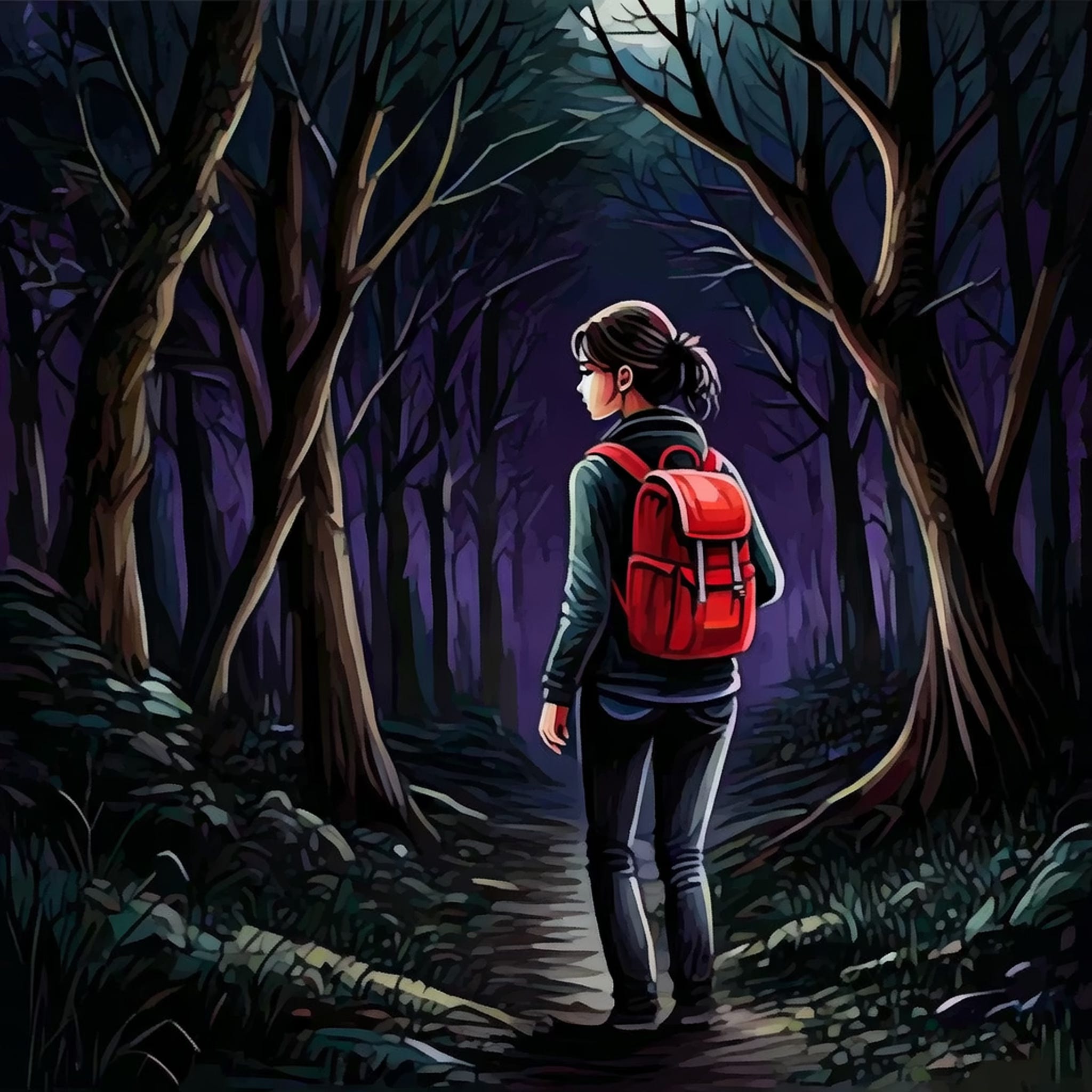
Writers are told to hook readers on page one or die trying, and nowhere does that pressure show up more nakedly than in the prologue. Murder now, context later. Nail-biting action now. The actual story? Don’t worry, you’ll get that ... eventually.
So I’d like to talk about the prologues that earn their keep—and the ones that feel like the marketing department was really worried about the page-turning ability of the story you might eventually find if you decide to stick around.
For example, I’m reading a mystery that opened gangbusters with an action-filled murder. Wow. The first chapter hooked me in, and I eagerly turned the page …
And slogged through another fifty pages of narrative and backstory, character introduction, and setting development, yada‑yada, until things got interesting again. I’m excited. The story really picked up, and I think I even found a story goal.
THEN at the midpoint, there was a whole chapter on WHY the story existed and an explanation of the murder in the opening pages, which I had completely forgotten because it had no connection to the last 100 pages of the book until scattered pieces laid out over those pages were put together for me by the villain in his own POV chapter.
That’s when I knew that this initial murder was an “artificial hook” and the author was compensating for a quiet, weak, slow Act 1. Actually, I knew it a lot earlier, but this works better as a blog‑post hook. Right?
Prologue as panic
As a writer, how many times have you been told (or beaten over the head) with you must hook your reader in the first line/paragraph/chapter and felt that really intense pressure and panic to do so? Otherwise, there are about 10 million other books readers can choose from, and yours will be a big, fat DNF.
I’ve recently read two craft posts on “it’s okay to start slow or boring” from BIG craft names—people I trust. Of course, once you’re in the weeds of these articles, it only becomes okay to start slow if the author is a bestseller on book 14 because (1) they’ve earned it and have fans who will read anything they produce, even a receipt from breakfast at McDonalds.
Or (2) if there is a critical consensus, and by critical, I mean “elite” book critics, who review “elite” books and have trillions of social‑media followers, who are oohing and ahhing at a boring opening, while I’m that kid in the crowd of the Emperor’s New Clothes. (He put up a vacuum? Come. On.)
There are different categories of artificial prologues, but I’m only going to talk about a few of the big offenders.
Pre‑prologue: some time BEFORE the story starts
We see this a lot in sci‑fi and fantasy: encyclopedic world‑building, because by thunder it took the author YEARS to build this place (there are definitely hand-drawn maps), and obviously you cannot possibly understand the protagonist until you’ve been briefed on every made‑up religion in his made‑up country.
We also get it in spy thrillers, where our hero sprints through a hail of gunfire, mowing down bad guys with gold‑medal athletic grace while the kidnap victim he’s saving is slung over his shoulder like a sack of flour, and every single spray of bullets from the villain’s henchmen’s automatic weapons misses (except for maybe a flesh wound), because they all apparently trained at the Empire Stormtrooper Academy. Then the book politely forgets this entire sequence ever happened, except for the takeaway that our hero is Very Good At Killing People While Jogging. Or swimming. Or leaping from the fifth-story window of a fire-engulfed building.
In mysteries? Oh, yeah. There’s almost a literal subgenre where the kid witnesses a shocking murder/kidnapping/horrific death (sometimes of a parent, sometimes of another family), which wrings sympathetic sympathy from us, the reader, before the story cuts to the kid as an adult detective/survivor many years later, with their paint‑by‑numbers childhood trauma meant to explain the protagonist’s damage/career choice/inability to bond (pick one or all), and her desperate need for justice because her parents’ murders were never solved.
“Wait, Potenza”, you say. “Have you ever written a prologue for one of your books?”
Yep.
“Was your prologue so amazing that you have the right to sneer?”
Nope. In fact, I fought tooth and nail with a critique partner about my pre-prologue’s importance, won—when she ghosted me forever because I wouldn’t listen—and now that book’s on a flash drive somewhere in my house, never to see the light of day.
So I’m not sneering at you. I’m sneering with you.
And while I snark at some of the we-all-recognize-these bad prologues, here are a few good prologues (or preambles in movies*) we can learn from:
The Mummy (1999) for the world‑building/religion
Indiana Jones and the Raiders of the Lost Ark (1981) and Indiana Jones and the Last Crusade (1989) for our survivor hero
In the Woods (Tana French, 2007), for childhood trauma to detective, although I’m on the fence with this one.
Oh, and one where the parent bears the childhood trauma: Finding Nemo (2003)
Climax‑prologue: beginning with the ending
This is the flash‑forward prologue to an action-packed climax from the END of the book, like this one:
Our Hero has a gun to their head, background explosions synchronize with a heart‑pounding score, turn the page … “Six months earlier …” where everyone surrounds the office gofer who has a tray of drink orders from Generic National Coffee Shop, and people are arguing over whether their lattes are made with almond or oat milk. By the time we slog back to that promised seconds-to-live scene 300 pages later, the book has become a slow train to nowhere, and you realize the real beginning is too boring to stand on its own, and that you should have checked it out from the library instead of draining your birthday gift card to pay full price.
Seriously, I have read skimmed a book from a well-regarded police-procedural mystery series that starts off with a student’s suspicious disappearance, then half of the later chapters are about the protagonist filling out and filing paperwork. And at the end, it turns out she just ran away. And it has 5000 reviews on Amazon!
Examples of climax‑prologues that work:
The Sixth Sense (1999)
Sunset Boulevard (1950)
A subcategory is the in medias res prologue: instead of flash-forwarding all the way to the end, this prologue pops up again somewhere earlier in the book, either in the correct ongoing chronology or in some explanatory chapter, like the book I’m reading now.
Example of an in medias res prologue that works:
The Emperor’s New Groove (2000).
Random victim’s last five minutes prologue
This is the action set‑piece prologue that’s disconnected by voice or emotion or story structure. Yes, it’s the raison d’être for the story, but we don’t usually care because we’ve never “met” the victim. It’s even worse when the opening murder is tangential to the plot, and with a little rewriting, could have been completely cut without harming the story goals.
I’ve read one of these in a serial‑killer story—the poor waitress with a heart of gold tied to a chair, blind-folded, beaten, then let free to stumble through abandoned tunnels with the villain whispering “I can see you” until the ax strikes and then the same scene is repeated with another victim later in the book, so it added almost nothing and actually decreased the suspense of that terror going forward.
Example when a “random victim’s last five minutes” prologue works:
Jaws (1975).
The “fake” prologue
Whatever is happening in the scene is fake, a gag, or a dream/imagined, but the reader won’t know that until later.
Example of a “fake” prologue that works:
Shattered Glass (2003).
When it doesn’t work, it feels like the author has just shouted “Gotcha!” and then quietly apologizes for wasting your time.
The Marketing prologue
This is when the author, editor, or publisher knows that the reader will wander off in the first few chapters, so they “patch” in a cynical (desperate) hook that feels both forced and sour.
In books, this is often the hyper-violent, anonymous victim/killer POV prologue that has a completely different tone from the rest of the novel. If you can cut it and nothing breaks? That’s a marketing prologue.
Example of a marketing prologue that “works” because we’ve come to expect it:
Almost every James Bond movie ever.
So … can you add a prologue?
A lot of authors do. Some are honest and label them “Prologue,” and some are dishonest and label them “Chapter 1.” Readers aren’t really fooled. A lot of readers confess to skipping them.
But if you do decide to write a prologue, it had better be a statement of genre, threat, and theme that sets the energy and tone for the ENTIRE book.
Or else …